|
|||||||||
| learn about your condition | about somatics | site contents | store | testimonials | contact | service | about Lawrence Gold | get professional training | home | |
|
||||||||||||||||||||

Definitive Pain Relief by Somatic Education
|
||||||
Why do people squirm or shift positions when they are in pain? Obviously, this squirming or shifting of position is an attempt to avoid pain, to find a comfortable position. But I suggest that there is another reason, an instinctual one: to "work out" or eliminate the pain itself. |
||||||
|
HOW THE METHOD WORKSThe following paragraph comes from an article written by Thomas Hanna, Ph.D., original developer of the method. |
||||||
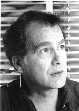
CLICK IMAGE FOR SOUND BITE |
There are two distinct ways of perceiving and acting upon physiological processes: first, one can perceive a body and act upon a body; second, one can perceive a soma and act upon a soma. The first instance is a third-person standpoint that sees an objective body "there", separate from the observer -- a body upon which the observer can act, for example, a doctor "treating" the patient. The second instance is a first-person standpoint that sees a subjective soma "here": namely, oneself -- ones own soma, upon whose process one can personally work, oneself. A soma, then, is a body perceived from within. [emphasis mine] | |||||
|
Somatic Education is sensory-motor, brain-muscle training to improve bodily awareness and voluntary control of ones muscular system. It is "somatic" in the sense that learning occurs as an internalized learning process. It affects how you feel to yourself.
This kind of training is greatly accelerated by the use of a natural bodily response, called The Pandicular Response. This response is universally familiar to people in the action of yawning and pleasurably stretching (though decidedly different than the effort to stretch muscles, as practiced in athletics and dance). It is an action pattern that occurs generally among animals throughout the vertebrate kingdom as animals arouse themselves from rest and prepare for action. In the pandicular response, a strong voluntary muscular contraction (motor action) feeds back an equally strong sensory stimulation to the sensory areas of the brain. The effect in the nervous system is to "wake up" the sensory-motor cortex of the brain and to awaken the feedback connection between the sensory and motor areas of the brain, which improves voluntary control of muscular action. Systematic use of the pandicular response is the prime technique used in Hanna Somatic Education.
Use of the pandicular response improves muscular control, even over involuntary muscular spasticity. Relaxation occurs as control improves. With relaxation, pain ends while control remains.
APPLICABILITY TO PAIN CONTROL
"It is my understanding that perhaps as many as fifty percent of the cases of chronic pain suffered by human beings are caused by sensory-motor amnesia (S-MA). "
This new term, Sensory-Motor Amnesia, which Dr. Hanna coined for descriptive purposes, refers to a condition often present in cases of chronic pain (and sometimes diagnosed as dystonia). Its most common sign is poor muscular control caused, not by damage of muscles or the brain, but by brain conditioning following injury or long-term stress. The person no longer has an accurate sense of movement and position, of which muscles s/he is holding tight and which are relaxed. Some areas of the musculature have too much sensation (pain) and some areas have diminished sensation. Some are too tight and some are too loose. Some kinds of movement are easy to control, others difficult. The pain of S-MA results primarily from chronic muscular tension and soreness (fatigue); additional pain may come from resultant joint compression and nerve entrapment (paraesthesias).
S-MA is a state of habituation, rather than a state of injury (i.e., a lesion). Tension and movement habits cannot be changed by drugs or surgery (which is why standard pain-management methods are so often only partially or temporarily effective with chronic pain); habits can be changed only by new learning -- in this case, by developing or reactivating neural pathways for free voluntary movement with an accurate sense of movement and position. The process involves learning or relearning muscular control, whatever the clinical method employed, and a shift from reflexive action to voluntary control.
Because of its use of the Pandicular Response, Hanna Somatic Education is a particularly effective method of brain-muscle training applicable to a wide range of complaints.
For a more complete discussion of Hanna Somatic Education read the article from which the quotes in this article were excerpted: "Clinical Somatic Education -- A New Discipline in the Field of Health Care", by Thomas Hanna, Ph.D. (published in Somatics -- Magazine-Journal of the Bodily Arts and Sciences, Volume VIII, Number 1, autumn/winter 1990-91.)
Copies of the issue containing this article can be purchased from The Novato Institute for Somatic Research and Training, 1516 Grant Avenue, Suite 212, Novato, CA 94945. Phone 415 892-0617.
The Institute for Somatic Study and Development
Lawrence Gold, C.H.S.E. Publications | Credentials | Personal Page Telephone 505 819-0858 | TERMS OF USE | PRIVACY POLICY | CONTACT: COPYRIGHT INFORMATION
|
||||||