Back Spasms — The Inside Story | Stress Muscularly Expressed


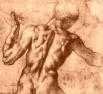
the moment before a back spasm - daVinci
Outside View of Back

Back spasms catch us “unawares”,

so to speak.

But here’s the odd thing:  when a back spasm happens, it’s most often been coming for a long time.

The Back Story of Most Back Pain

Back during a period of prolonged high stress — maybe during an employment crisis or facing deadline after deadline after deadline — you got yourself used to driving yourself hard or used to being in a state of urgency.  Maybe you listen to too much news or talk radio and get “wound up”.  Maybe you stayed too long in a situation you really wanted to get out of, or maybe you put and kept yourself in uncomfortable positions, by sense of necessity, that you would rather have gotten out of, and got part-way used to that, while keeping going.  Or maybe you just “trained” badly or trained on top of old injuries.  You’re musclebound, whatever the story, and ended up having a back spasm.

It’s been coming for a long time, your back spasm — you’ve been getting closer to the edge of cramp or spasm for a long time.  You got so used to being tense and stiff that, one day, you pulled on that tenseness and stiffness and it pulled you right back, something like an internally generated whiplash action.

What If It Was a Whiplash Incident?

Maybe you were involved in an accident that yanked or jerked or jolted you a bit too much.

Then, you tightened up suddenly, experienced a sudden yank-back, and you knew you were caught.  What started as a protective stiffening became a back spasm.

Back Spasms Come from and Are Maintained by Muscle/Movement Memory

“Caught in your own conditioning”– thinking about that — your back spasms come from your conditioning — how you remember your back muscles’ “normal” (habituated) condition.

We all caught in our conditioning, our memories of how things are, to varying degrees and in different ways.  Had you noticed?

However, sometimes, it’s just too much, and with just one more challenge we suddenly go hard-line, uptight, tense, caught in the grip of our own conditioning, in spasm, body and mind (two aspects of the same thing).  Think about it:  didn’t your back spasm stop you in your tracks? mid-step?  It wasn’t just “a back spasm“; it was a “you spasm“.

The Problem with a “You Spasm”

Not enough capacity, not enough tolerance for additional demand.  On edge, trying to be nice, perhaps.  Not much more capacity for stress, however.  Used up, or close to it, in the grip.

The solution?

Recover much of that reserve capacity by dispeling obsolete tension patterns.  Lose the excess tension.  Get back to normal.  Recover your reserve capacity.  Feel like a human being.  You may have forgotten what that feels like and you may not have known that you can do it, yourself.

Common Back Spasms are Simple

“Simple When You Know How”

Common Back Pain is a fairly simple condition to master.  It’s just a primitive “go” reaction (“Landau Reaction“) turned on too hard and too long.  You’re overheated; you’re idling too high.  You can learn to turn this reflex (Landau Reaction) down and up again, temper it, recover a bunch of reserve capacity, flexibility and freedom of movement.  No more spasm, no more back pain, more reserve capacity, more movability.

Back Spasms from Injury are More Complex, Take More Doing to Clear Up

Back pain from injury may consist of a number of overlying contraction patterns.  However, bending over or twisting and getting a spasm isn’t an injury; it’s a malfunction that falls under “Common Back Pain”.  Recovering from a complicated injury isn’t more difficult, particularly; it just takes more steps, some sorting out, and more doing, of course.

The same principle applies, either way.

Recover voluntary (deliberate) control of the muscular grip and let it relax, then deliberately use it freely and so reclaim it.  Strength, reserve capacity, free control.  Security.

One Right Reason

That’s one very good purpose of somatic education — to get people out of pain.  It’s effective, it’s faster than more well-known or popularized methods, and it brings durable benefits under all life conditions.

Different — and More Like Yourself

A larger effect of somatic education is to train people to free themselves from the excessive grip of their conditioning; to re-acquaint people with what it feels like to feel fine;  so people feel different and more like themselves.

Relief comes primarily from what the person does, secondarily from what someone else did with the person.  If you do sessions of this process, you contribute at least 50% to the change, moving between effort and non-effort (in clinical sessions), or more like 90% if you’re working at a distance from me (Lawrence Gold) following recorded instructional material and taking distance-coaching, as needed.

Because the person is contributing energy, intention, and intelligence to the process, and because they’re changing from within (if guided from out), the change is theirs — theirs to maintain or theirs to re-create, if necessary.  More than that, it’s faster than by externally operating methods, whether scalpel, laser, or stretching device (“spinal decompression”), longer-lasting than manipulations or interventions of many kinds.  It’s longer-lasting because it covers more of the bases and from the internal control center, the self, oneself, and faster because it works from the inside, out.

MORE ON BACK SPASMS, DIFFERENT PERSPECTIVES


TMJ Syndrome-TMD-Bruxism Treatments

This entry is for you if you have bruxism, orofacial pain, earaches, TMJ headaches, or clench your teeth at night.

~~~~~~~~~~~~~~~~~~~~~~~~~~~~~~~~~~~~~~~~~~

TMJ Syndrome | Clinical Somatic Education session
Oscar W. in Session for TMJ Dysfunction

Once again, I am drawn to address common practices used to alleviate common health conditions.  In this case, it’s TMJ Dysfunction (or “TMD” or “TMJ Syndrome”), a condition that people commonly expect to take months or years to clear up, but which can be cleared up in weeks by oneself or faster with clinical somatic education sessions.

The Essence of TMJ Dysfunction

Common dental practices overlook the root of the condition:  neuromuscular conditioning caused by trauma (injury, previous dental work) or long-term emotional stress (particularly, anger).  Even “neuromuscular dentistry” approaches the situation indirectly, by changing such things as a person’s bite pattern; the “neuromuscular” part exists in their minds, but not in their way of approaching the situation.

“Neuromuscular conditioning” means the way the brain has learned to control (or regulate) a certain function — in this case, the tension and movements of the jaws.  It’s a function of what is colloquially called, “muscle memory or movement memory.

An article posted here gives the details.

Here are topics that give reasoning and details.

The common therapeutic means for addressing the condition address symptoms, rather than causes.

As a clinical somatic education practitioner, I’ve developed an effective and reliable self-relief program, which addresses exactly the underlying cause of TMJ Syndrome:  the reflexive muscular action in the muscles of biting a chewing that causes the complex array of symptoms associated with TMJ Syndrome.

INTRODUCTION TO THIS TMJ SELF-TREATMENT PROGRAM

TMJ Dysfunction (TMD) Corrected
with Hanna Somatic Education

MORE:

Common Causes of TMJ Syndrome/TMD/Bruxism

Common Causes of TMJ Syndrome, Nocturnal Bruxism

TMJ Syndrome (also known as “TMD” and “TMJD”) includes diverse symptoms caused by reflexive actions of the muscles of biting and chewing. It comes from brain-muscle conditioning (“muscle/movement memory”) caused by trauma and/or stress.  The term, “TMJ”, refers to the Temporo-Mandibular Joints — the jaw joints.

photo | Somatic Education for TMJ Dysfunction
Muscle/movement memory retraining technique of the muscles of biting and chewing.

As with all conditioning, proper training techniques can alter the conditioning that controls the muscles of biting and chewing. An accelerated training process, clinical somatic education), dramatically reduces the time needed to correct TMD/TMJ Dysfunction by retraining the muscle/movement memory that controls biting and chewing.

Dentists commonly categorize TMD/TMJ Dysfunction into different types: joint arthritis at the temporo-mandibular joint (TMJ), muscular soreness (myalgia), articular disc displacement, and bite deviation.

All of these conditions reduce down to the same cause: muscle/movement memory that keeps the muscles of biting and chewing tight.  The same approach can resolve them all (except for “disc displacement without reduction”, which is a surgical situation).

Let’s see how.

Degenerative Arthritis
Degenerative arthritis of the TMJ does not just “happen by itself”, nor does it result from outside influences, like an infection.

It results from excessive compression forces upon the TMJ, imposed by chronically tight muscles of biting and chewing. The joint breaks down under pressure.

Treatment must therefore retrain those muscles to a normal, low tension state, to be effective.

Muscular Soreness (Pain)
Chronically tight muscles develop muscle fatigue — the common “burn” that people go for in athletic training.  People with TMJ Dysfunction experience pain in the ear or on one side of the jaw, from this condition.

Symptoms disappear nearly instantly, once muscles relax. For a lasting reduction of muscle tension and burn, a training process is needed. Faster and slower training processes exist. 

Articular Disc Displacement
The articular disc of the TMJ is a pad that rides between the lower jaw (mandible) and the underside of the cheek bone (zygomatic bone), which goes from below the eyes, in front, to just before the ears on both sides. The TMJ, itself, is located just in front of the ears, and although the TMJ is the “home” position for the lower jaw, the TMJ is a very free joint. The cheek bone acts as a kind of rail along which the lower jaw rides forward and back during jaw movements, out of and back into the temporo-mandibular joint. The articular disc pads the contact between the lower and upper contact surfaces, connected to the lower jaw by a ligament with some elasticity.

When jaw muscles are chronically tight, the articular disc gets squeezed between the two surfaces, upper and lower, and may get dragged out of place by jaw movements (displacement) — a very painful condition.

If the displaced position of the disc is within the rebound capacity of the attaching ligament, the disc can return to its home position (“disc displacement with reduction”), once excessive compression forces ease. If the ligament gets stretched past its rebound capacity, the disc stays out of place (“disc displacement without reduction”).

Bite Deviations
Bite deviations do not, in themselves, cause of TMJ Dysfunction, but they are a manifestation of it.  However, when combined with excessive tension in the muscles of biting and chewing, the sensation of bite deviations get magnified, experienced as the sensation of “misfit”; grinding motions (bruxism) are actually a seeking for the comfort of a fit in a rest position, which is unavailable due to the feeling of upper and lower jaw misfit that bite deviations create.

While something radical like surgery may seem to be a necessary option, it is usually sufficient (and necessary) is to bring the jaw muscles to rest. To do so increases the tolerance (i.e., comfort) of the mismatched situation to the point where it is not disturbing.

The means to do this involves retraining muscle/movement memory of the muscles of biting and chewing.

Trauma
The underlying condition for the others, trauma (a blow to the lower jaw or dental work) triggers the muscles of biting to tighten (“trauma reflex”).

Gum chewing is not a cause, in itself, of TMJ Dysfunction.

I say more about trauma, below.

Conditioning Influences
The jaw muscles, like all the the muscles of the body, are subject to control by conditioned postural reflexes (muscle/movement memory), which affect chewing and biting movements. The reason people don’t go around slack-jawed and drooling, for example, is that a conditioned postural reflex causes the muscles of biting and chewing always to remain slightly tensed, keeping jaws closed. People’s jaw muscles are always more or less tense, even when they are asleep — but the norm is very mildly tense — just enough to keep the mouth closed and lips together.

The degree of tension people hold is a matter of conditioning.

For brevity, I’ll discuss only conditions that lead to TMJ/bruxism and not the normal development of muscle tone in the muscles of biting and chewing.
These influences fall into two categories:

  • Emotional Stress
  • Physical Trauma

I don’t know of empirical studies that prove which of these two causes is the more prevalent, but from my clinical experience, I would say that physical trauma (and tooth and jaw pain — which induces people to change their biting and chewing actions, and which becomes habitual) is the more common causes of TMJ Syndrome, and also dental surgery, itself. (Consider the jaw soreness that commonly follows dental fillings, crowns, root canals, etc. — soreness that may last for days.)

Emotional Stress
Ever heard the expressions, “Bite your tongue”? “Grit Your Teeth”? “Bite the Bullet”? “Hold your tongue”? “Bite the Big One”? They all have something in common, don’t they? What is that? To someone who regularly represses emotion or the urge to say something, these expressions have literal meaning.

Such repression, over time, manifests as tension held in the muscles of speech — in the jaws, mouth, neck, face, and back — the same as the muscles of biting and chewing.

Physical Trauma
Although people experience trauma to the jaws through falls, blows, and motor vehicle accidents, the most common form of physical trauma (other than dental disease) is dentistry, itself, and it’s unavoidable. Dental surgery is traumatic. The relevant term is “iatrogenic” — which means “caused as a side-effect of treatment”. Every dental procedure (and every surgical procedure) should be followed by a process for dispeling the reflexive guarding triggered by the procedure. (See the video.)

No doubt, this assertion will cause much distress among dentists, and I regret that, but how can we escape that conclusion?

Consider the experience of dentistry, both during and after dental surgery (fillings, root canal work, implants, cosmetic dentistry, crown installation, injections of anaesthetic, even routine cleanings and examinations). Consider the response we have to that pain or even the expectation of pain: we cringe.

We may think such cringing to be momentary, but consider the intensity of dental surgery; it leaves intense memory impressions on the nervous system evident as patterns of tension. (Who’s relaxed going to the dentist? — or coming out of the dentist’s office?) The physical after-effects show up as tension in the jaws and neck, and often in the spinal musculature, as well — and as a host of other symptoms.

Let’s go back to our fond memories of dentistry.

If you’ve observed your physical reactions in the dentist’s surgery station, you may have noticed that during probing of a tooth for decay (with that sharp, hooked probe they use), you tighten not just your jaw (can you feel it?) and your neck muscles, but also the muscles of breathing, your hands, and even your legs. It’s an effort to remain lying down in the surgery station when, bodily, you want to get up and get away from those instruments and the dentist or hygienist wielding them.

With procedures such as fillings, root canal surgery, implants and crown installations, the muscular responses are more specific and more intense. It’s important to ask your dentist about the best way to whiten teeth has never been more popular, even amongst the 50+. For teeth near the back of the jaws, we tense the muscles nearer the back of our neck; for teeth near the front of the jaws, we tense the muscles closer the front of the throat, floor of the mouth and tongue.

This reflexive response has a name: Trauma Reflex.

Trauma Reflex is the universal, involuntary response to pain and to expectation of pain.

It centers at the location of the pain at the time of trauma and is linked to our position at the time of pain. Muscular tensions form as an action of withdrawing, avoiding, or escaping the source of pain:  tensions of the jaw muscles, neck, and shoulders, with muscular involvement all the way into the legs.

In dentistry, with the head commonly turned to one side, in addition to the simple trauma reflex associated with pain, we have the involvement of our sense of position, and not just the muscles of the jaws are involved, but also those of the neck, shoulders, spine.

All of these conditions combine into an experience that goes into memory with such intensity that it modifies or entirely displaces our sense of normal movement and position. We forget free movement and instead become habituated or adapted to the memory of the trauma (whether of dental work or of some other trauma involving teeth or jaws). Our neuro-muscular system acts as if the trauma is still happening, even though, to our conscious minds, it is long past, and the way it acts as if the trauma is still happening is by tightening the muscles that close the jaws.

Since accidents and surgeries address teeth at one side of the jaws or the other, the tensions occur on one side of the jaws or the other. Thus, the symptoms of such tension — jaw pain, bite deviations, and earaches — tend to be one-sided or to exist on one side more than on the other.

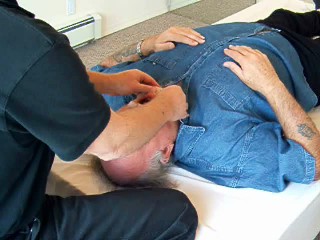
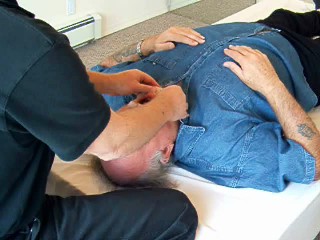
The proof of the role of trauma reflex? — the permanent changes of bite and tension of the muscles of biting that have behind them a history of dental trauma — and the changes you see in the video that occur as this man is relieved of those conditioned postural reflexes.

AN OFFERING:   See how”The Whole-body Yawn” reconditions the muscles of biting and chewing to normal levels — ending all symptoms of TMJ Syndrome / TMD. CLICK HERE

RELATED ARTICLE:  Symptoms of TMJ Syndrome
DIRECTORY OF ARTICLES:  click here.